How to stop puppy biting: 6 ways to teach gentler mouths
 Save
Puppy biting is not aggression or misbehaviour. It is how puppies explore the world, play with littermates and learn how hard is too hard. Your job is to teach bite inhibition – the skill of controlling jaw pressure – and redirect that natural mouthing onto things that can take it. Charlotte Animal Behaviour works with owners who worry their puppy will never stop nipping, and the answer is always the same: they will, if you teach them what works instead.
Why puppies bite and what they are learning
Puppies are born without the ability to judge bite pressure. In the litter, they learn through feedback: a sibling yelps and stops playing when bitten too hard, so the puppy learns to soften their mouth to keep the game going. When a puppy arrives in your home, that education continues with you. Mouthing is also a way to soothe sore gums during teething, which peaks between three and six months.
The goal is not to stop all mouthing immediately. Puppies need to mouth soft things to develop good bite inhibition before their adult teeth come in. What you are teaching is where, when and how gently.
Teach bite inhibition before you stop mouthing altogether
Bite inhibition means a dog can control the force of their bite, even in moments of excitement or fear. This is a critical safety skill. You build it by letting your puppy mouth you gently at first, then gradually raising your standards.
When your puppy bites too hard, let out a high-pitched yelp or say "ouch" in a sharp tone, then withdraw your attention for a few seconds. Turn away, fold your arms or leave the room briefly. The puppy learns that hard bites end the fun. After a pause, re-engage calmly. Repeat this every time teeth press too hard.
Once your puppy consistently uses a softer mouth, raise the bar: yelp at slightly gentler pressure. Over weeks, you shape a mouth that never hurts, even during play.
Redirect mouthing onto appropriate items
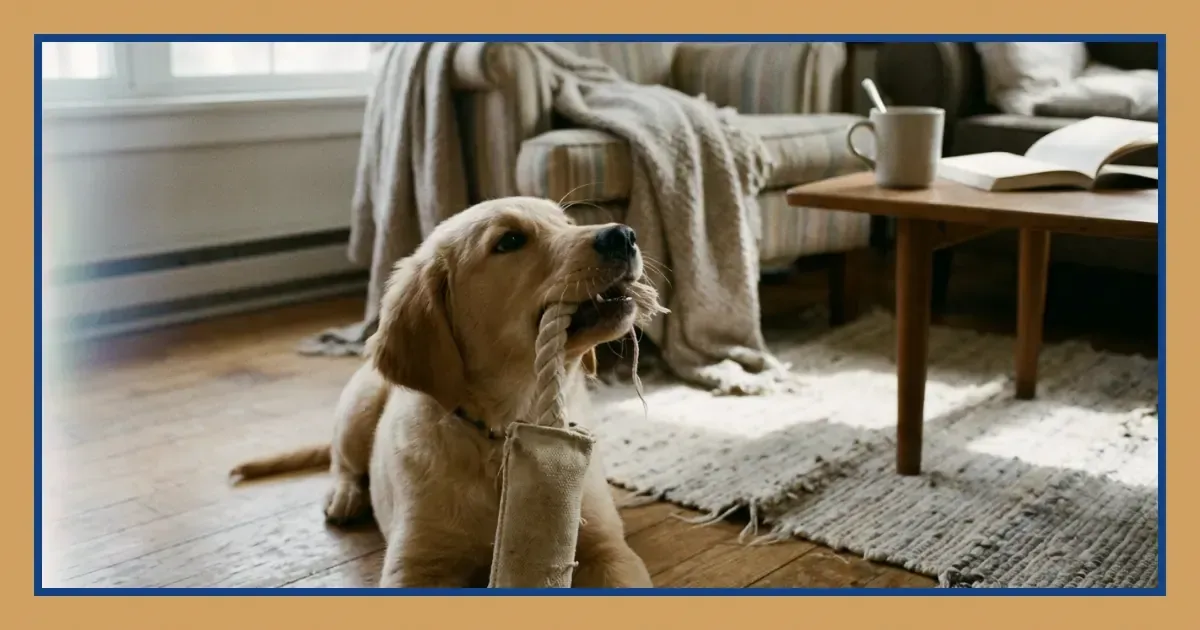
Puppies need to chew. Telling them "no" without offering an alternative leaves them confused and frustrated. Keep a variety of textures within reach: rubber toys, rope tugs, frozen carrots (which soothe teething gums) and chews that last.
When your puppy goes for your hand or trouser leg, calmly redirect them to a toy. If they take it, praise and play with them using that toy. If they ignore it and return to your hand, withdraw attention again. The pattern becomes clear: hands end the game, toys keep it going.
Rotate toys every few days so they stay interesting. A bored puppy will invent their own entertainment, and that often involves your fingers.
Manage arousal and tiredness
Puppy biting gets worse when arousal is high or when a puppy is overtired. Watch for the warning signs: frantic movement, ignoring all toys, biting that feels more urgent. This is not defiance; it is overstimulation.
Before it escalates, guide your puppy to a calm space with a chew or a stuffed Kong, or settle them in a crate or pen for a nap. Puppies need far more sleep than owners expect – around eighteen hours a day for young pups. A well-rested puppy has better impulse control.
Avoid roughhousing that winds your puppy up. Games that involve your hands as toys teach the wrong lesson. Clicker training works because timing shapes behaviour more clearly than words ever can, and it keeps sessions short and focused.
What to do right now: six practical steps
- Yelp or say "ouch" sharply the moment teeth touch skin, then turn away and pause all interaction for ten seconds.
- Keep a toy in every room so you can redirect mouthing immediately without searching.
- Schedule calm-down time in a safe space after every play session, before your puppy becomes overtired.
- Freeze a damp cloth or a carrot to give your puppy something that soothes sore gums.
- Reward your puppy with attention and gentle praise every time they choose a toy over your hand.
- Avoid games where you pull your hand away quickly – movement excites prey drive and makes mouthing worse.
Common mistakes that make mouthing last longer
Shouting, pushing your puppy away or holding their muzzle shut all feel like interaction to a puppy, and interaction is what they want. These reactions can make biting more frequent because the puppy learns that biting gets a response, even a loud one.
Likewise, never tap a puppy on the nose or use any form of physical correction. It damages trust, and a puppy who is anxious or confused will struggle to learn anything.
Another mistake is waiting until biting hurts before responding. Teach gentleness early, when stakes are low, so your puppy learns the right habit before their adult teeth arrive.
When mouthing is part of a wider picture
If your puppy is also showing signs of fear, stiffness, growling or guarding behaviour alongside mouthing, the biting may not be play. Resource guarding in dogs: 5 early signs and what they mean explains what to watch for. In these cases, contact a qualified animal behaviourist who can assess your puppy in context.
Mouthing that persists well beyond six months, or that escalates in intensity despite consistent teaching, also warrants professional support. The earlier you intervene, the easier behaviour is to shape.
How long before it stops
Most puppies show clear improvement within two to four weeks of consistent teaching, though teething can cause temporary setbacks. By the time adult teeth are fully in – usually around seven months – a well-taught puppy will have excellent bite inhibition and will choose toys over hands almost every time.
Consistency matters more than speed. Every person in the household needs to respond the same way, every time. Mixed messages confuse puppies and slow progress.
| Approach | What it teaches | When to use it |
|---|---|---|
| Yelp and withdraw | Hard bites end fun | Every time teeth press too hard |
| Redirect to a toy | Toys are more rewarding than hands | When mouthing starts |
| Calm-down time | Rest prevents overstimulation | After play or when arousal is high |
| Frozen chews | Soothing alternatives for teething | Throughout the teething period |
What good bite inhibition looks like
A dog with strong bite inhibition can play tug, wrestle gently with other dogs and take a treat from your hand without ever causing pain. Even if startled or hurt, they will not bite down hard. This is the safety net you build during puppyhood, and it lasts a lifetime.
The work you do now – the yelps, the redirections, the consistent boundaries – is not just about stopping nipped fingers. It is about raising a dog who can be trusted in all situations, with all people.
Download PDF: Puppy Bite Inhibition Checklist PDF, 29 KB
Further reading
Frequently asked questions
What is the difference between puppy biting and aggression?
Puppy biting is normal exploratory and play behaviour with a loose, wiggly body and no tension. Aggression involves stiffness, growling, a hard stare or guarding, and requires professional assessment.
How can I teach my puppy not to bite my hands during play?
Yelp sharply when teeth touch skin, withdraw attention for ten seconds, then redirect your puppy to a toy. Reward them with continued play when they choose the toy. Repeat every time.
How long does it take to stop a puppy from mouthing?
Most puppies show clear improvement within two to four weeks of consistent teaching. Full bite inhibition develops by around seven months, once adult teeth are in and teething has ended.