Introducing your dog to a new baby means preparing them for change before the birth and guiding them gently through every stage
 Save
Introducing your dog to a new baby requires preparation that starts weeks before the birth and continues as your household settles into a new rhythm. The work is less about a single meeting and more about helping your dog adjust to unfamiliar sounds, routines and boundaries so they remain calm when the baby arrives. Charlotte Animal Behaviour walks you through the preparation, the first introduction and the weeks that follow.
Your dog notices change before the baby arrives
Dogs pick up on shifts in routine, household activity and your own emotional state long before a baby is born. Furniture moves, new objects appear and the rhythms of daily life alter. These changes can unsettle a dog who thrives on predictability.
Start adjusting your dog's routine early. If walks will happen at different times once the baby arrives, shift them gradually now. If your dog sleeps in your bedroom and that will change, move their bed to the new location well in advance. Give them time to accept each adjustment without linking it to the baby's arrival.
Introduce baby-related sounds and smells before the birth. Play recordings of infant crying at low volume while your dog eats or enjoys a chew, then raise the volume slowly over several days. Bring home baby powder, nappies and lotions so your dog becomes familiar with the scents. Pair each new element with something your dog finds pleasant so they build positive associations rather than anxiety.
Boundaries protect both dog and baby
Decide which rooms your dog will access once the baby is home and enforce those boundaries now. If the nursery will be off-limits, use a baby gate and reward your dog for settling calmly outside it. If your dog jumps up or demands attention, teach an alternative behaviour such as sitting for a treat or lying on a mat.
Practice walking your dog while pushing a pram. Many dogs pull or become distracted when a new object enters their walk. Reward calm walking and loose-lead behaviour so the pram becomes just another part of the routine. If your dog already struggles with lead pulling, address that now rather than managing both a baby and an unruly dog on the pavement.
The first meeting sets the tone
Your dog will be alert and curious when you return home with the baby. Let someone else carry the baby inside while you greet your dog calmly in a separate room or the garden. Give them a few minutes to settle their excitement at seeing you before introducing the baby.
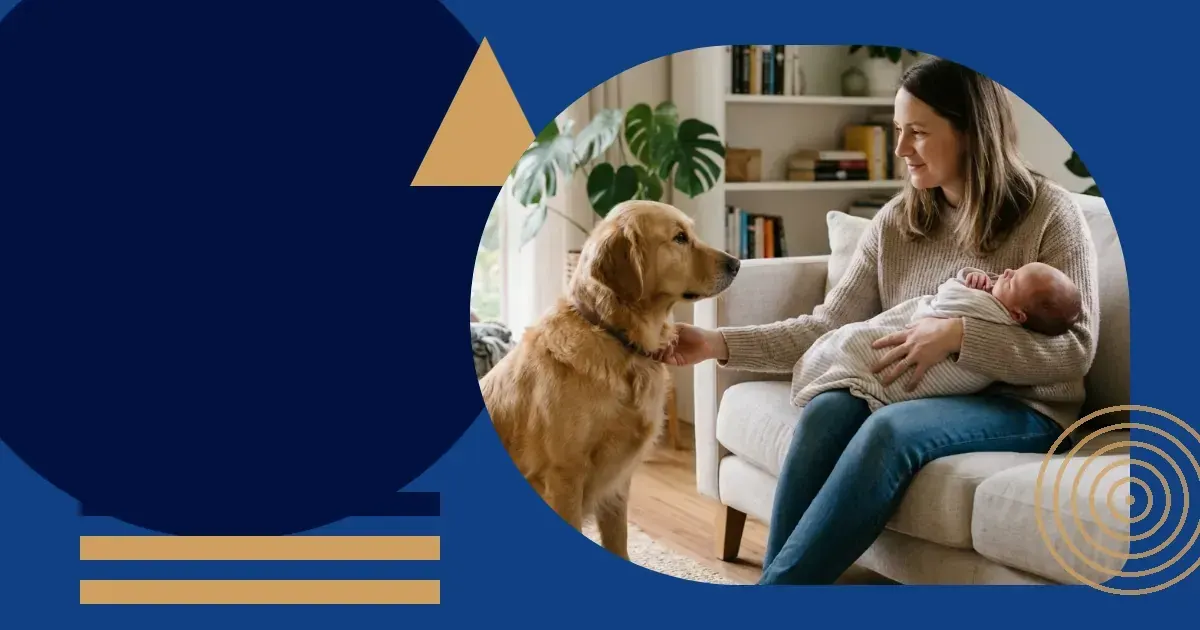
Keep your dog on a lead for the first meeting, not as a punishment but as a way to guide them without grabbing or restraining. Sit down with the baby and allow your dog to approach at their own pace. Reward quiet, gentle investigation with calm praise. If your dog shows no interest, that is equally acceptable. Never force the interaction or hold the baby close to a reluctant dog's face.
Watch your dog's body language throughout. A soft body, gentle sniffing and a relaxed tail suggest curiosity without stress. Tension in the shoulders, a stiff tail, intense staring or whale eye (the white of the eye visible) mean your dog is uncomfortable. If you see these signs, increase the distance between dog and baby and try again later.
The first weeks require patience and observation
The days after the baby arrives bring exhaustion, unpredictable schedules and heightened emotion. Your dog will feel the disruption. They may become clingy, withdrawn or show behaviours such as pacing, panting or seeking attention at unusual times.
Maintain as much of your dog's routine as possible. Feed them at the same times, keep walks consistent and give them quiet time away from the baby's activity. If your dog seeks reassurance, provide it. A dog who feels secure is less likely to view the baby as a threat.
Never leave your dog and baby alone together, even for a moment. This is not about distrust but about preventing accidental harm. A dog who steps on a baby while moving across the room or a baby who grabs a dog's ear can create a situation neither intended. Supervision is the only reliable safeguard.
Your dog's needs do not disappear
It is easy to let your dog's enrichment slide when a newborn dominates your time. A bored or under-exercised dog is more likely to show frustration, demand attention or react unpredictably to the baby's presence.
Scatter feeding, puzzle toys and short training sessions give your dog mental stimulation without requiring long stretches of your attention. A stuffed Kong or a snuffle mat occupies them while you feed or settle the baby. If walks become shorter, increase the challenge by letting them sniff more or introducing new routes.
Enlist help where you can. A friend or family member who walks your dog or plays with them in the garden relieves pressure on you and ensures your dog's needs remain met. If your dog seems persistently anxious or shows behaviour that worries you, environmental changes that reduce stress may help before the situation escalates.
Warning signs require immediate action
Most dogs adjust to a new baby without incident, but some show signs of stress or guarding that need addressing quickly. Stiffening when the baby cries, growling when you approach with the baby in your arms, or attempting to push between you and the baby are behaviours that should not be ignored.
If your dog shows any of these signs, increase the distance between them and the baby immediately. Do not punish the behaviour; your dog is communicating discomfort. Instead, create situations where your dog can succeed. Reward calm behaviour at a distance and build gradually closer over days or weeks.
Resource guarding can emerge in unexpected ways. A dog who has never guarded food or toys may begin guarding you, particularly if the baby occupies much of your time. If you see guarding behaviour, recognising the early signs helps you respond before it becomes entrenched.
Professional support exists when you need it
You do not need to manage this alone. If your dog's behaviour concerns you or if the adjustment is not progressing as you hoped, a qualified behaviourist can assess the situation and guide you through it. Look for someone who works with positive reinforcement and has experience with dogs in family settings.
Early intervention is easier than correcting a problem that has become a habit. If you are unsure whether your dog's behaviour is normal adjustment or something that requires help, choosing a behaviourist who uses methods you trust gives you clarity and a plan forward.
Preparing your dog step by step
The months before your baby arrives give you time to prepare your dog in manageable stages. Each step builds on the last, reducing the overwhelm your dog might otherwise feel when the baby is suddenly part of their world.
- Adjust routines gradually. Change walk times, feeding times and sleeping arrangements in small increments so your dog adapts without linking the disruption to the baby.
- Introduce baby sounds and scents. Play recordings of crying at low volume during positive activities and bring home baby-related items so they become familiar.
- Teach boundaries with baby gates. Block access to the nursery or other rooms now and reward your dog for calm behaviour on the other side of the gate.
- Practice calm greetings. Reduce excitement when you come home by waiting until your dog settles before giving them attention, preparing them for the quieter greeting they will receive when you return with the baby.
- Walk with a pram before the birth. Let your dog adjust to the new object on walks so it becomes routine rather than a distraction.
- Reinforce gentle behaviour. Reward your dog whenever they approach you or new objects calmly, building a habit of softness that will serve them when the baby is present.
Comparing preparation approaches
Different households take different routes to preparing a dog for a baby. The table below contrasts three common approaches and what each prioritises.
| Approach | What it involves | What it prioritises |
|---|---|---|
| Gradual desensitisation | Introducing baby sounds, scents and routines slowly over weeks | Reducing anxiety through familiarity |
| Boundary training | Teaching the dog which spaces are accessible and reinforcing calm behaviour near gates | Safety and clear household rules |
| Enrichment maintenance | Ensuring the dog's mental and physical needs remain met throughout the transition | Preventing frustration and boredom |
The bond between dog and child grows over time
The first meeting is just the beginning. As your baby grows, your dog will adjust to each new stage. A newborn who lies still becomes a crawler who moves unpredictably, then a toddler who reaches for fur and ears. Each phase requires supervision and teaching on both sides.
Teach your child to respect your dog as they grow. Show them how to stroke gently, when to leave the dog alone and how to recognise when the dog has had enough. A child who learns to read a dog's signals early builds a relationship based on mutual respect rather than one-sided affection.
Your dog may surprise you. Some dogs who seemed indifferent to the baby become gentle companions as the child begins to move and interact. Others who were curious at first need more space as the baby becomes more active. Both responses are normal, and neither means the relationship has failed. What matters is that both dog and child feel safe, and that you remain the bridge between them.
#Routine #Body language #Desensitisation #Enrichment
Download PDF: Preparing your dog for a new baby PDF, 30 KB
Further reading
Frequently asked questions
When should I start preparing my dog for a new baby?
Start preparing your dog several weeks before the baby arrives. Adjust routines gradually, introduce baby sounds and scents, and establish boundaries early so your dog has time to adapt without linking the changes to the baby's sudden arrival.
How do I introduce my dog to the baby for the first time?
Let someone else carry the baby inside while you greet your dog calmly in a separate space first. Once your dog has settled, sit down with the baby and allow your dog to approach on a lead at their own pace, rewarding quiet, gentle investigation.
What signs suggest my dog is struggling with the new baby?
Watch for stiffening when the baby cries, growling when you approach with the baby, intense staring, or attempting to push between you and the baby. These signs indicate discomfort and require you to increase distance and seek professional guidance if they persist.