What Is a Pet Behaviour Consultation – and Four Steps to Prepare for One
 Save
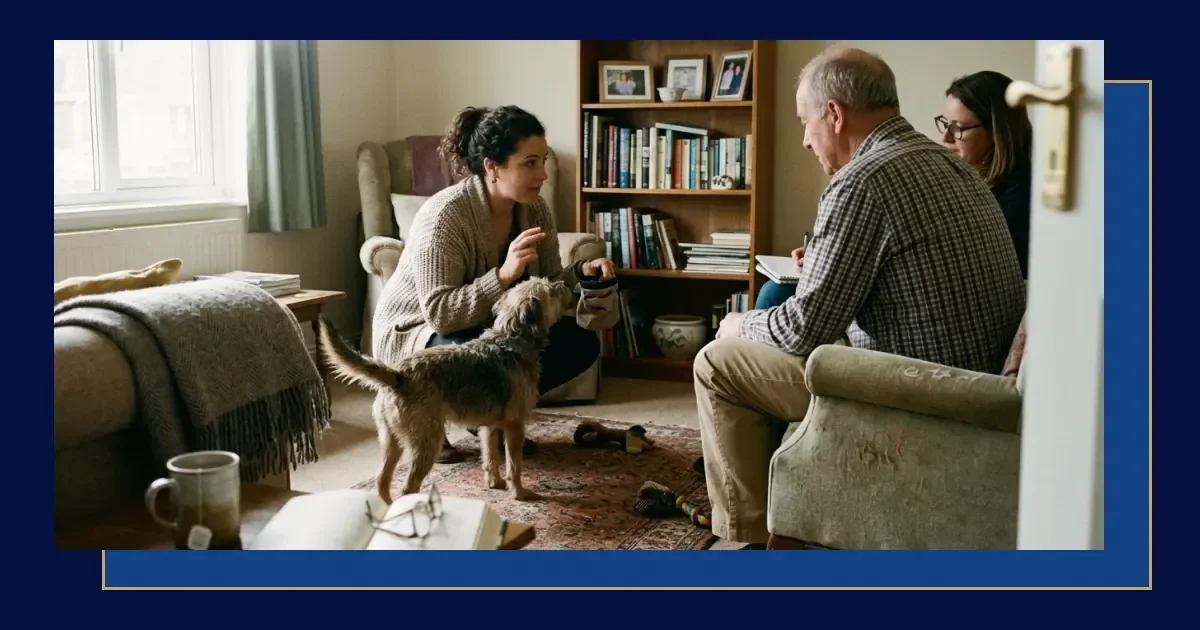
A pet behaviour consultation is a structured meeting with a trained professional who assesses why your dog or cat behaves the way they do and creates a plan to address unwanted patterns. Charlotte Animal Behaviour explains what happens during an appointment, what you need to bring and how to make the most of the time you have. Most consultations take place at home, last between one and two hours, and result in a written plan you can work through at your own pace.
A behaviour consultation starts before the appointment itself
You will be asked to complete a questionnaire before the first meeting. This covers your pet's history, daily routine, health, diet and the specific behaviours you want help with. The more detail you give, the clearer the picture the behaviourist has before they meet your pet. Mention when the behaviour started, what triggers it and what you have already tried.
The questionnaire also asks about your household – how many people live with you, whether there are other pets, children or regular visitors. All of this shapes the plan. A dog who barks at strangers behaves differently depending on whether they live alone with one person or in a busy family home with school-aged children.
Health comes first
Behaviourists are not vets. Before working on a behaviour problem, rule out pain, illness or discomfort with your vet. A cat who has stopped using the litter tray may have cystitis; a dog who snaps when touched may be guarding a sore joint. If health issues are found, the behaviour plan adapts once treatment is under way.
The appointment itself observes your pet in their own space
The behaviourist arrives at an agreed time and usually asks to see your pet in the environment where the behaviour happens. If your dog pulls on the lead, you may be asked to walk them briefly outside. If your cat hides from visitors, the behaviourist watches where they go and how long it takes them to reappear.
You talk through the behaviours in detail. The behaviourist asks what happens before, during and after each episode – the antecedent, the behaviour itself and the consequence. This ABC model reveals patterns you may not have noticed. A dog who chews furniture may do it only when left alone in a particular room; a cat who scratches the sofa may target one corner at a specific time of day.
Your pet is not judged. Neither are you. Behaviour problems develop for reasons that make sense once you understand what drives them, and the consultation is designed to uncover those reasons without blame.
Body language is read throughout
The behaviourist watches how your pet moves, where they position themselves and how they respond to changes in the room. A dog who yawns repeatedly is not bored – they are showing stress. A cat whose tail twitches while being stroked is warning that they have had enough. These signals shape the advice you receive.
You leave the consultation with a written behaviour modification plan
The plan breaks the work into manageable steps. It names the behaviour you want to change, explains why it happens and sets out what to do next. Each step is specific: not "train your dog to be calmer", but "reward your dog for sitting when the doorbell rings, before they have a chance to bark".
The plan may include desensitisation – gradually exposing your pet to the trigger at a level they can cope with – and counter-conditioning, which pairs the trigger with something your pet enjoys. Both techniques take time and require consistency. If your dog is anxious around visitors, you might start by having a friend stand quietly at the gate while you reward your dog for calm behaviour, then progress to the friend stepping inside.
You also receive management strategies: changes you can make immediately to reduce the behaviour while the longer-term work takes effect. A cat who scratches furniture gets new scratching posts placed near the spots they already target. A dog who guards their food bowl is fed in a separate room until the guarding is addressed.
Follow-up support is usually included
Behaviour change does not happen overnight. Most behaviourists offer follow-up contact by phone or email between appointments, and some schedule a second visit to review progress. You are encouraged to keep notes on what works and what does not, so adjustments can be made to the plan.
Four ways to prepare for a productive consultation
- Keep a diary for a week before the appointment. Note when the behaviour happens, what was going on at the time and how you responded. Patterns emerge more clearly on paper than in memory.
- Gather your pet's records. Bring vaccination history, any recent vet notes and a list of medications or supplements they take. Health and behaviour are connected, and small details can matter.
- Prepare your household. If other people live with you, make sure they can be present or are briefed on the appointment. Everyone who interacts with your pet needs to follow the same plan, or progress stalls.
- Set aside time on the day. Consultations are not rushed. Allow two hours without interruptions, and avoid scheduling anything immediately afterwards. You will want time to absorb what has been discussed.
Choosing the right behaviourist matters as much as the consultation itself
Look for someone with recognised qualifications. In the UK, clinical animal behaviourists may be members of the Association for the Study of Animal Behaviour or hold a diploma from an accredited programme. Check their approach: ethical behaviourists use methods based on positive reinforcement and avoid techniques that rely on fear, pain or dominance.
Ask about their experience with your pet's specific issue. A behaviourist who works mostly with dogs may not be the best fit for a cat with territorial behaviour, and vice versa. Most offer a brief phone consultation before booking, which gives you a sense of how they work and whether their style suits you.
Cost varies depending on location and the behaviourist's experience. A consultation may be charged as a flat fee or an hourly rate, and follow-up sessions are usually priced separately. Some pet insurance policies cover behavioural consultations if the problem is linked to a medical condition – check your policy before booking.
Common concerns and how behaviourists address them
| Concern | How it is addressed |
|---|---|
| My pet will be too stressed to behave normally during the appointment | Behaviourists are trained to read stress signals and adapt the session. The consultation may take place in the room where your pet feels safest, or observations may happen from a distance. |
| I have tried everything already and nothing has worked | Behaviourists look at the underlying cause, not just the surface behaviour. What worked for another pet may not suit yours, and small changes in timing or technique can make a significant difference. |
| The plan will be too complicated to follow | Good behaviour plans are broken into small, achievable steps. You are not expected to do everything at once, and the behaviourist adjusts the plan if something is not working. |
Progress takes longer for some behaviours than others
Mild anxiety or attention-seeking behaviours often improve within weeks. Deeply ingrained patterns – aggression, severe separation anxiety, long-standing fear – may take months of consistent work. The consultation gives you realistic expectations and a timeline based on your pet's history and temperament.
Setbacks are normal. A dog who has stopped barking at visitors may start again after a stressful event; a cat who has been using the litter tray reliably may avoid it during building work. The plan accounts for these moments and shows you how to get back on track without losing the progress you have made.
Understanding what positive reinforcement training involves before your consultation helps you grasp the techniques you will be asked to use. If your pet's issue involves visitors, you may also find it useful to read about how to stop a dog barking at visitors so you arrive with questions already forming.
Between appointments, your consistency shapes the outcome
Behaviour work depends on what you do at home. The behaviourist provides the framework, but you and everyone in your household apply it. If one person rewards calm behaviour while another scolds the same pet for being too quiet, the mixed messages slow progress.
Stick to the plan as written for at least two weeks before deciding it is not working. Behaviour change is gradual, and small improvements – a dog who barks three times instead of ten, a cat who hides for an hour instead of a whole evening – are progress worth noting.
Keep in touch with your behaviourist. If something is unclear or a new behaviour has appeared, contact them before the next scheduled appointment. Early adjustments prevent frustration on both sides.
Not every behaviour requires a consultation
Some issues resolve with straightforward environmental changes or clearer routines. A cat who knocks things off tables may simply need more stimulation; you can read about why cats knock things over to decide whether the behaviour warrants professional input. A young dog who mouths hands may grow out of it with basic bite inhibition training.
Book a consultation when the behaviour is escalating, when it is affecting your pet's quality of life or your own, or when you have tried multiple approaches without improvement. Aggression towards people or other animals, destructive behaviour that persists despite management, and signs of severe anxiety all benefit from professional assessment.
#Positive reinforcement #Desensitisation #Counter-conditioning
Download PDF: Before Your Pet Behaviour Consultation PDF, 28 KB
Further reading
Frequently asked questions
How long does a pet behaviour consultation take?
Most consultations last between one and two hours. This includes time to observe your pet, discuss the behaviour in detail and explain the plan. Follow-up appointments are usually shorter.
What should I bring to a behaviour consultation?
Bring any completed questionnaires, your pet's vaccination and vet records, a list of medications they take, and notes on when the behaviour happens. If the behaviourist asks to see your pet outside, have a lead or carrier ready.
Will the behaviourist work directly with my pet during the consultation?
The behaviourist observes your pet and may interact with them briefly to assess their responses, but the focus is on understanding the behaviour and teaching you how to address it. Most of the work happens between appointments, at home.